


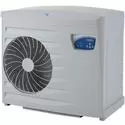






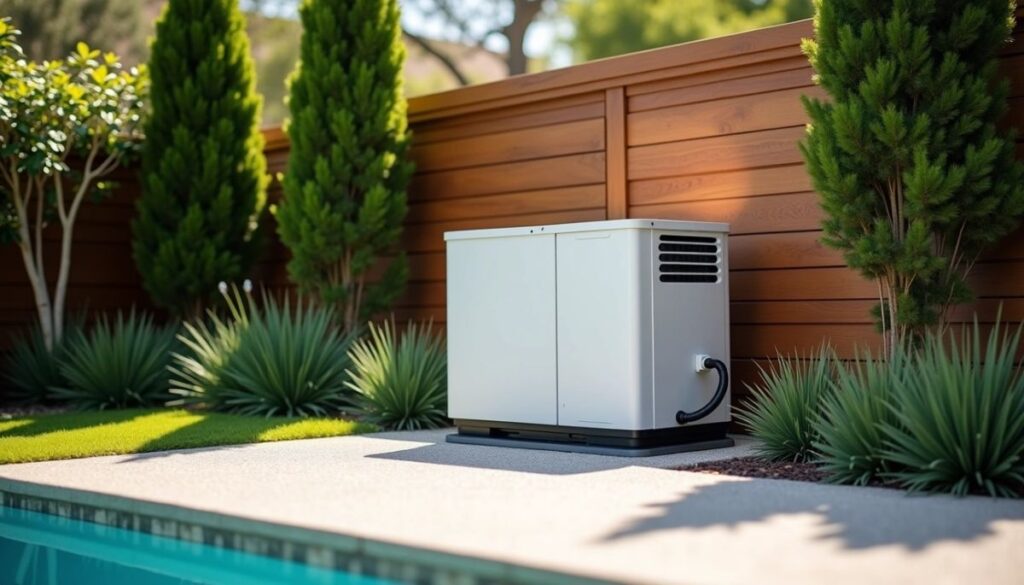
Pool heat pump noise driving you crazy? You’re definitely not alone. Variable-speed pool pumps can cut your energy bills by up to 90 percent, but many homeowners get frustrated when that constant humming ruins peaceful backyard time.
Here’s what makes this worth solving: a quiet pool heat pump actually works better too. Variable-speed models typically earn seven-star energy ratings and save you around $1,150 over their lifetime compared to standard pumps. Features like inverter technology give you precise temperature control while using less energy. Plus, a solar pool cover can prevent up to 70% of heat loss overnight.
We’ve put together 11 practical solutions that actually work for pool heat pump noise. You’ll find clear advice on acoustic insulation, relocating equipment, and upgrading to quieter models — all designed to help you get it right the first time. Your backyard should be relaxing, not noisy.
- Soundproof enclosures deliver the biggest impact - Pre-fabricated acoustic boxes reduce noise by up to 80-90% and install in just 15 minutes without tools.
- Anti-vibration pads offer the quickest fix - These simple rubber mats eliminate up to 50% of pump noise by preventing vibration transfer through the ground.
- Strategic scheduling costs nothing but saves everything - Running pumps during off-peak hours reduces noise complaints while cutting energy bills by hundreds annually.
- Variable-speed pumps solve noise and efficiency together - These advanced units operate whisper-quiet at low speeds while slashing electricity consumption by over 80%.
- Regular maintenance prevents noise escalation - Annual cleaning and professional servicing keep equipment running quietly while significantly extending operational lifespan.
1.
Table of Contents
ToggleInstall a Pool Pump Noise Reducer
Soundproofing enclosures work better than just about anything else for cutting pool heat pump noise — we’re talking up to 80% reduction. If you want quick results without major construction headaches, this approach delivers real improvements fast.
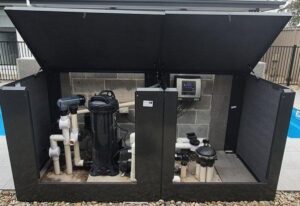
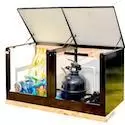
Ready-made acoustic enclosures give you the easiest path to quieter operation. These purpose-built boxes come in different sizes and setups, including backless versions for wall-mounted equipment. Many feature gas lifts for easy access, weatherproof construction, and go together in just 15 minutes without special tools. You also get extra protection from weather, pets, and accidental damage.
For even better noise control, consider these upgrades:
Mass Loaded Vinyl (MLV)
This dense material significantly blocks sound from getting through enclosure walls.
Vibration-damping materials
Professional acoustic kits
Keep this in mind: proper ventilation stays crucial — never seal your heat pump in an airtight box. Instead, design baffle “silencers” for ventilation openings to maintain airflow while keeping noise contained. Also, avoid hollow supports under your pump that can actually make the sound worse by acting like echo chambers.
2.
Use a Silent Pool Heat Pump
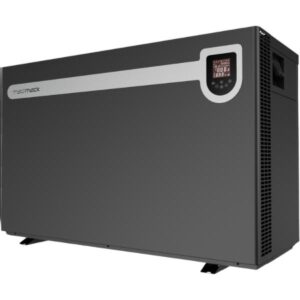
Getting the right heat pump from the start beats trying to fix noise problems later. Modern silent pool heat pumps operate as low as 38.4 dB(A) at 1 metre — about the same volume as your kitchen refrigerator.
When shopping for a quiet heat pump, the decibel (dB) rating tells the real story. Most standard heat pumps operate around 50 dB(A), but you’ll find substantial differences between models. Pool heat pumps range from 60 decibels (like an air conditioner) down to 39 decibels (comparable to a refrigerator). Even a 5 dB reduction makes a noticeable difference to your ears.
Today’s quietest heat pumps rely on several key innovations:
Triple-Layered Sound Insulation
Advanced Fan Technology
Superior Compressors
Full Inverter Technology
Full Inverter Technology
Look for models featuring:
- ECO-friendly R32 refrigerant (common in newer, quieter units)
- Dedicated "Night Mode" or "Whisper Mode" settings
- Centrifugal fans rather than traditional blade designs
- Anti-vibration components are built directly into the design
Keep in mind that published noise levels typically represent optimal operating conditions. Reading user reviews that mention real-world noise performance helps before making your final selection. Even the quietest heat pump should still be installed following best practices for location and mounting to minimise any potential noise transfer.
At Best Pool Supplies, we stock a range of modern pool heat pumps designed to run quietly and efficiently, along with accessories that help reduce vibration and sound.
3.
Add Acoustic Insulation Around the Pump
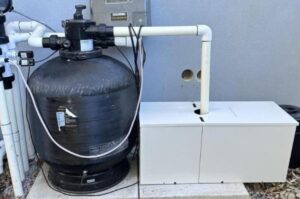
Acoustic Box 680mm Pump Box / Enclosure
Acoustic insulation gives you a direct way to tackle pool heat pump noise by working on both airborne sounds and structural vibrations. Quality sound-absorbing materials can cut pump noise by up to 80% when you apply them correctly.
- Airborne noise that travels through the air
- Structural vibrations that move through solid surfaces
You need materials designed to handle both issues. Dense materials block sound transmission, while porous materials absorb sound waves — combine them for the best results.
Here are the most effective acoustic insulation options:
Reinforced Mass Loaded Vinyl (MLV)
Polyurethane Foam Products
Rubber Isolation Mats
Placement matters as much as the material itself. Sound follows the path of least resistance, so even small gaps can substantially compromise your soundproofing efforts. Aim for complete coverage of all surfaces facing noise-sensitive areas.
For DIY applications, self-adhesive acoustic products make installation straightforward. Most can be attached directly to existing surfaces before being mechanically fastened for long-term stability. Many acoustic materials provide thermal insulation too, potentially improving your heat pump’s efficiency.
Unlike complete enclosures, acoustic insulation doesn’t restrict airflow — making it an excellent choice when ventilation concerns might otherwise limit your noise-reduction options.
4.
Relocate the Pool Heat Pump
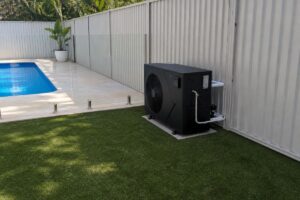
- Keep it at least 2.5 metres from the pool itself. This isn't just about noise — it's actually a safety requirement too.
- Give it breathing room. You'll want at least 30 cm of clear space in front of the air intake (though 1 metre is better). The fan outlet needs even more space — about 3 metres of completely clear area.
- Watch out for problem spots. Putting your heat pump directly under windows is asking for trouble. The same goes for tight corners or small courtyards where sound just bounces around.
- Point it the right way. The fan should blow away from your house, bedrooms, and your neighbour's place. That cold air discharge works best when it flows toward areas where nobody really hangs out.
- Think about height. Lifting your heat pump slightly off the ground cuts down on noise travelling through soil. Just don't go too high above water level — you might need a non-return valve to keep everything working properly.
Most noise complaints happen when equipment sits too close to living areas or bedrooms. Moving it just a bit further away often solves the whole problem.
Here’s something many people miss:
- Concrete slabs can actually make noise worse by bouncing sound waves upward. Those "big foot" rubber mounts made from recycled tyres work much better. They soak up vibrations and you don't need to pour concrete at all.
- Keep your heat pump within about 12 metres of your pool pump, though. Go much further and you'll create friction in the pipes, making everything work harder and potentially louder.
- Moving pool equipment does require someone who knows pool plumbing and water flow, but the payoff goes beyond just noise reduction. You'll get better energy performance, longer equipment life, improved safety, and a nicer-looking pool area.
5.
Install a Soundproof Pool Pump Enclosure
Pre-fabricated soundproof enclosures offer pool owners a practical solution for noise control without complicated construction work. These purpose-built boxes cut pool heat pump noise by up to 80-90% while keeping your equipment running properly.
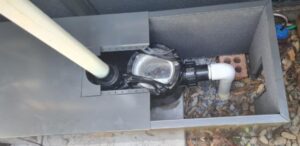
Australian-made galvanised steel enclosures with 20mm acoustic-grade foam lining provide professional results with simple installation. You can assemble these units in about 15 minutes without screws, nuts, bolts, or special tools. Most models have just three parts that click together — manageable for anyone.
These enclosures provide more than just noise reduction:
- Weather protection that extends equipment life
- Pet and child safety around pool equipment
- Shield from falling branches and storm debris
- Meets Australian state and council sound requirements
- Better appearance with powder-coated colour options
Many Australian homeowners choose commercial units over DIY builds for good reasons. Professional enclosures guarantee proper ventilation, weather resistance, and compliance with noise regulations. Powder coating adds corrosion protection too.
Measure your equipment before buying. Quality manufacturers offer over 50 size combinations. Think about future upgrades — expansion options are usually available if you enhance your pool system later.
No special skills needed for installation means you save contractor costs. These solutions work immediately — your pool area gets quiet as soon as you finish setup.
At Best Pool Supplies, we stock a range of acoustic boxes in various sizes and colours, designed to help reduce vibration and sound.
6.
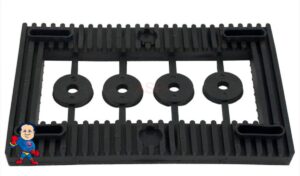
Use Anti-Vibration Pads
- Thick and dense materials — thin pads won't handle serious vibration
- Weather-resistant EPDM rubber that won't deteriorate in sun and rain
- Pads designed specifically for motors and pumps, not generic options
- Proper load rating — quality pads handle 3kg/cm²
These specialised mats work by creating a cushion between your heat pump and whatever it’s sitting on. Many feature a waffle design that absorbs vibration while keeping your equipment stable.
Besides cutting noise, they help your equipment last longer by reducing vibration stress on internal parts.
These mats work best when your pump sits on level ground and produces steady vibration noise. The biggest problems happen when pumps are bolted directly to concrete slabs connected to your house — vibrations travel right through the structure.
Here’s a tip: pair vibration pads with flexible PVC connections. Replace any rigid piping with corrugated hose to stop vibrations from travelling through your plumbing. This simple combination tackles vibration from multiple angles.
7.
Schedule Operation During Off-Peak Hours
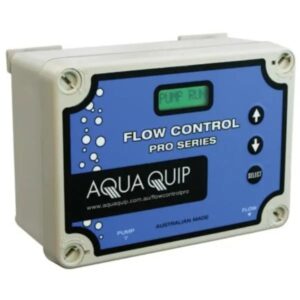
Aqua-Quip Flow Control Timer w. Flow Switch
Sometimes the best solutions cost nothing at all. Timing your pool heat pump’s operation strategically can significantly reduce noise impact on your household and neighbours — without spending a cent on equipment or modifications.
Ambient noise masking
Higher efficiency
Better temperature maintenance
Newer heating controllers include WiFi connectivity, allowing remote temperature control and scheduling through smartphone apps. These smart controls let you fine-tune operations — programming your system to run at lower speeds or switch to eco mode during sensitive hours.
Proper scheduling delivers benefits well beyond noise control. Running your pump during off-peak electricity periods can substantially lower your energy bills. Setting your variable-speed pump to its lowest setting during off-peak hours can save you hundreds of dollars annually.
Heat retention plays a crucial role in scheduling efficiency. Good insulation and a quality pool cover dramatically reduce overnight heat loss, meaning your system doesn’t need to work as hard the following day. This creates a helpful cycle: less runtime equals less noise and lower operating costs.
For best results, run your heater during both off-peak electricity hours and when solar gain is highest — typically late morning to early afternoon. This balanced approach maximises efficiency while minimising both noise disturbance and operational costs.
8.
Upgrade to a Variable-Speed Pool Pump
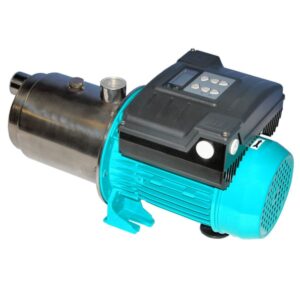
Onga Enviromaster Variable Speed Household Pump
Variable-speed pool pumps give you two wins at once: quieter operation and serious energy savings. These pumps run at lower speeds for everyday tasks, which means much less noise compared to old-school single-speed models that blast at full power all the time.
Noise reduction explained
Variable-speed pumps run at much lower RPMs during regular filtration. Less speed equals less noise — it’s that simple. When running slowly, these pumps barely make a sound compared to the constant roar of single-speed units. Plus, the totally enclosed fan-cooled motors (TEFC) keep out moisture, dust, and salt that can damage components.
Energy savings worth considering
The upfront cost is higher, but these pumps pay for themselves through lower electricity bills:
- A 5-star variable-speed pump uses 55% less energy than a 1-star single-speed model
- Pool pumps typically eat up 18% of your household electricity
- Most homeowners save over 80% on pump electricity costs after switching
Here’s the science: cut motor speed in half, and power consumption drops to just 1/8 of what it was.
Variable-speed pumps also clean your water better. Slower flow gives filters more time to catch debris, rather than pushing dirt right through. You get cleaner water with less noise. The precise speed control also reduces wear on pipes and equipment.
What to look for
- Choose pumps with 8+ star energy ratings. Get models that let you programme different speeds for different jobs and schedule when they run.
- Your pool doesn't need full power for basic filtering. Variable-speed technology lets you match the pump's work to what's actually needed — gentle circulation most of the time, more power when you need deep cleaning — all while staying whisper-quiet.
9.
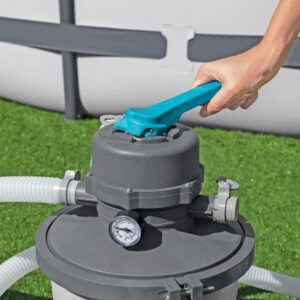
Maintain Your Pool Heat Pump Regularly
Better energy efficiency
Equipment lasts longer
Cleaner water
Cheaper repairs
10.
Install a Pool Equipment Fence or Barrier
Here’s how it works: break the line of sight between you and the noise source. Once you can’t see the pump, you’ll get at least a 5 dB noise reduction right away — enough to make a real difference in your daily comfort.
Getting the Most From Your Barrier
Place your barrier smart — either close to the heat pump or near your house to stop sound from jumping over the top. Height matters too. You’ll want your barrier at least twice as tall as your pool pump for the best noise blocking.
Make it heavy if you can. Adding products like Mass Loaded Vinyl significantly boosts your fence’s sound-stopping power. Just remember to seal up any gaps — even tiny ones — so sound doesn’t leak through.
Many folks go with a straightforward approach: build a fence-style wall near the property line, then pack it with insulation material. No fancy construction skills needed, but you’ll get solid results.
11.
Use Landscaping for Natural Soundproofing
Your garden can actually help solve your pool heat pump noise problem. Strategic landscaping with dense vegetation works as an effective sound barrier while making your yard look better too.
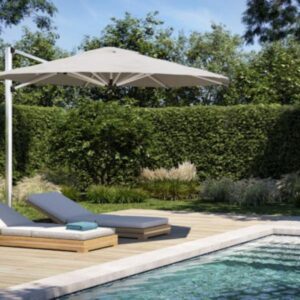
Properly designed plant barriers can reduce noise by 5-10 decibels. That’s a meaningful difference — you’ll notice the sound feels about half as loud to your ears.
Plants that work best for noise reduction:
Grevillea
Lomandra
Bottlebrush
Bamboo
Lilly pilly
Plant in staggered rows between your heat pump and living areas for best results. Adding an earthen berm beneath your plantings can boost noise reduction by another 6-15 decibels.
You can combine plants with other solutions too — timber fencing behind dense vegetation works particularly well. Wood naturally absorbs sound, while metal tends to reflect it back.
Quick Comparison: What Works Best for You
| Solution | Noise Reduction Effectiveness | Installation Complexity | Cost Implication | Key Benefits | Implementation Time |
|---|---|---|---|---|---|
| Install a Pool Pump Noise Reducer | Up to 80% | Moderate | Moderate | Weather protection, easy access, pet/child safety | 15 minutes |
| Use a Silent Pool Heat Pump | Down to 38.4 dB | Low | High initial cost | Energy savings up to 90%, precise temperature control | Immediate after installation |
| Add Acoustic Insulation | Up to 80% | Moderate | Moderate | Dual airborne/structural noise control, thermal benefits | Variable |
| Relocate the Pool Heat Pump | Variable | High | Moderate-High | Improved efficiency, extended equipment life | Professional installation required |
| Install Soundproof Enclosure | 80-90% | Low | Moderate | Weather protection, esthetic improvement, quick results | 15 minutes |
| Use Anti-Vibration Pads | Up to 50% | Very Low | Low | Extended equipment life, immediate results | Minutes |
| Schedule Operation Hours | Variable | Very Low | Cost savings | Lower energy bills, compliance with regulations | Immediate |
| Upgrade Variable-Speed Pump | Significant (not specified) | Moderate | High initial/Low long-term | 80% energy savings, extended equipment life | Professional installation required |
| Regular Maintenance | Variable | Low | Low-Moderate | Extended equipment life, improved efficiency | Ongoing |
| Install Equipment Fence | Minimum 5 dB | Moderate | Moderate | Privacy, weather protection, aesthetic improvement | Variable |
| Use Landscaping | 5-10 dB | Moderate | Moderate | Esthetic improvement, natural look, year-round benefits | Growth period required |
Reduce Pool Heat Pumps Noise with Best Pool Supplies
Pool heat pump noise doesn’t need to be a big headache. You’ve got plenty of options here — from simple anti-vibration pads to complete soundproof enclosures or upgrading to quieter models. Most of these solutions do more than just cut noise — they help your equipment last longer, reduce energy bills, and make pool care easier.
Your backyard setup will determine what makes the most sense. Think about long-term value, not just the upfront cost. Quiet operation makes your outdoor space more enjoyable and might even boost your property value.
FAQs
How can I effectively reduce noise from my pool heat pump?
What's the quickest way to minimise pool heat pump noise?
Are there any noise reduction methods that can also save energy?
How does regular maintenance affect pool heat pump noise?
Can landscaping help reduce pool heat pump noise?

Best Pool Supplies is backed by a team of pool care enthusiasts with experience in maintenance, equipment, and everyday pool ownership. They’re dedicated to sharing clear, practical advice to help customers look after their pools with confidence.